

Gestational Carrier Timeline: From Initial Workup to Embryo Transfer
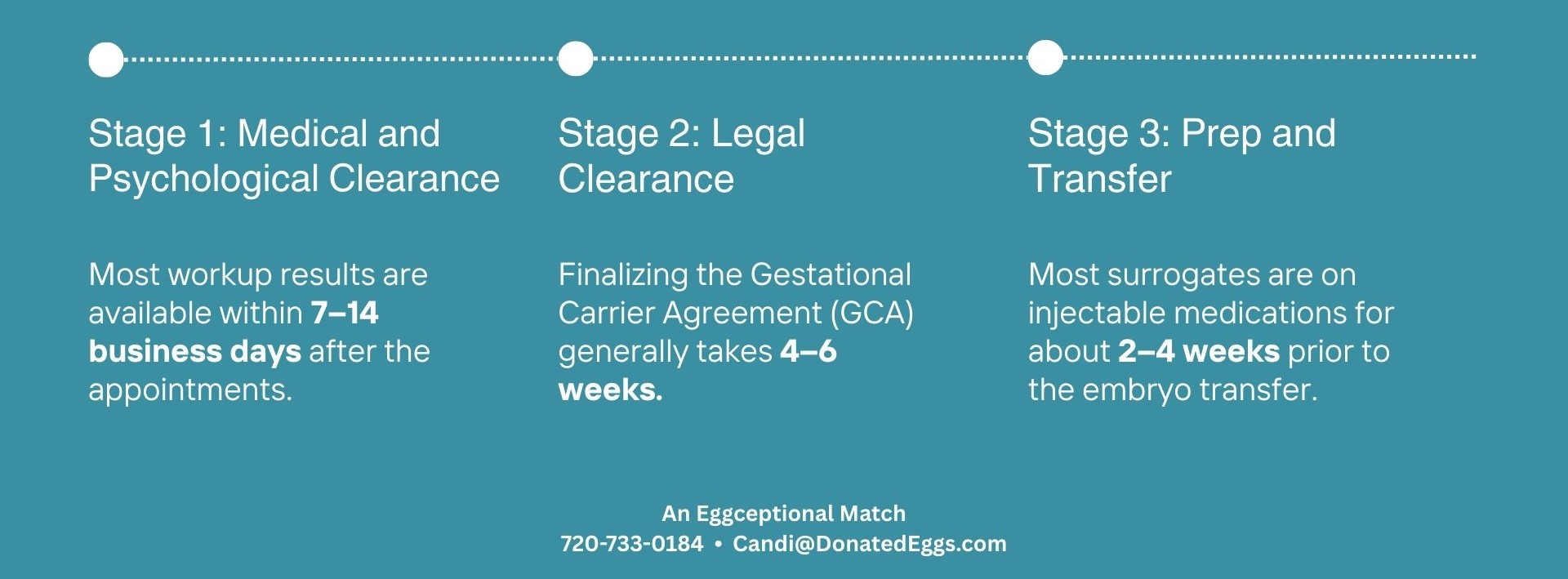
Embarking on a gestational carrier journey involves several carefully timed stages. Understanding the timeline can help intended parents and surrogates feel more prepared and confident every step of the way. Here’s a breakdown of what to expect during those three to four months:
Stage 1: Medical and Psychological Clearance
Before a surrogate can move forward, she undergoes a thorough medical and psychological evaluation to ensure she is fully prepared for the journey ahead. This includes a variety of tests, screenings, and consultations. Most surrogates receive their workup results within 7-14 business days after completing their appointments. This stage ensures the safety and well-being of both the carrier and the future baby.
Stage 2: Legal Clearance
Once the surrogate is medically and psychologically cleared, the next step is legal preparation. The Gestational Carrier Agreement (GCA) is a detailed contract outlining the rights, responsibilities, and expectations of both the surrogate and the intended parents. Finalizing the GCA typically takes 4-6 weeks, giving all parties time to review the agreement carefully and obtain any necessary legal advice. This stage provides peace of mind and a clear roadmap for the journey ahead.
Stage 3: Preparation and Embryo Transfer
After legal clearance, the surrogate begins preparation for the embryo transfer. This often involves a regimen of injectable medications, typically administered for 2-4 weeks, to help prepare the uterus for implantation. Once the medications are complete and the uterus is confirmed ready, the embryo transfer can proceed, bringing everyone one step closer to the exciting moment of pregnancy.
Every journey is unique, timelines can vary depending on individual circumstances. However, this outline provides a “textbook” cycle to help intended parents and surrogates know what to expect and feel prepared at each stage of the process!