
Fresh vs. Frozen Egg Donation: What Intended Parents Need to Know
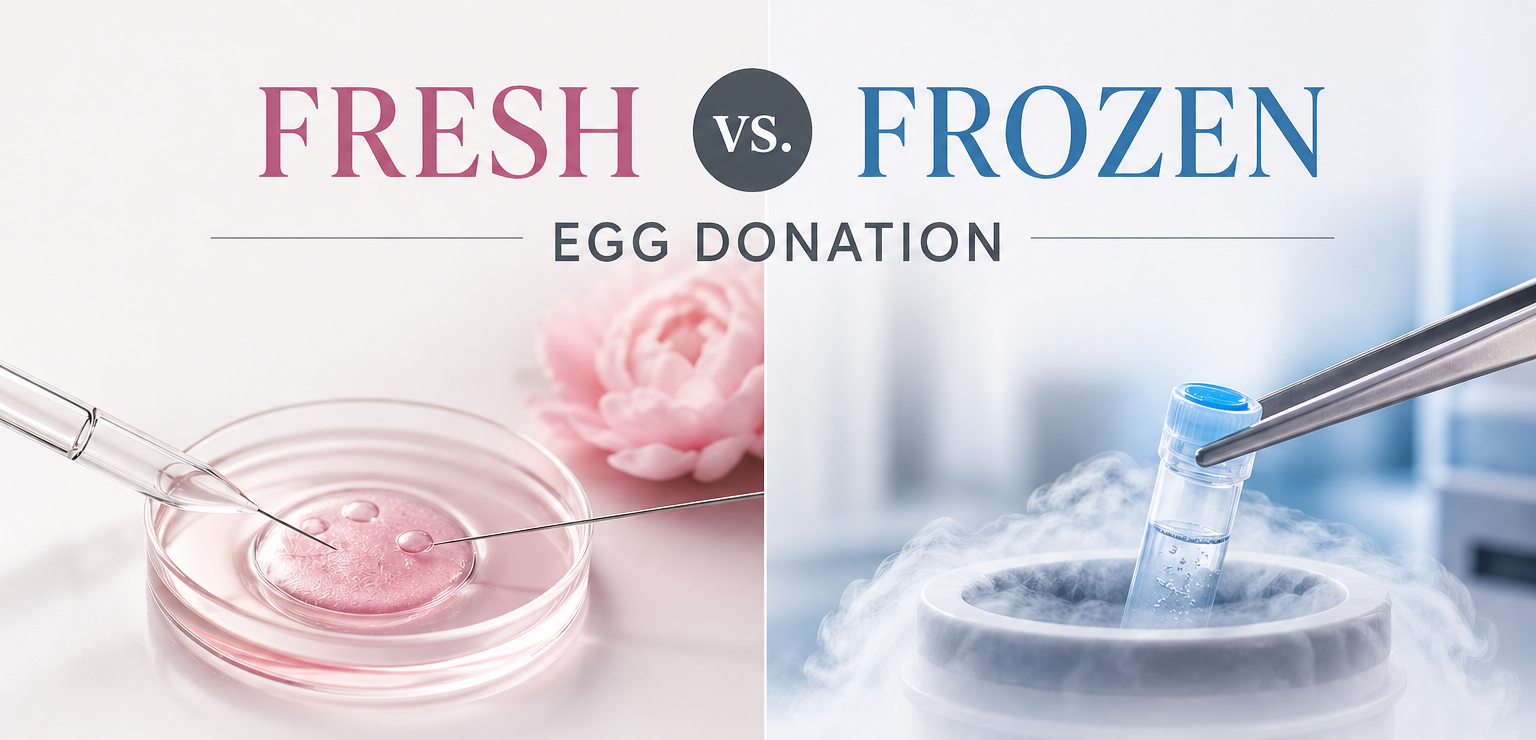
Choosing an egg donor is one of the most meaningful steps in your fertility journey. For many Intended Parents, the next important decision is understanding the difference between fresh egg donation vs frozen egg donation.
Both options are widely used in modern IVF treatment and offer excellent success rates. The right choice depends on your timeline, family-building goals, and preferred level of coordination.
This guide breaks down everything you need to know.
What Is Fresh Egg Donation?
Fresh egg donation refers to a cycle where eggs are retrieved from a donor and immediately fertilized in an IVF laboratory to create embryos. Once eggs are retrieved, fertilization occurs shortly after, and embryos are either transferred or frozen for future use.
Benefits of Fresh Egg Donation
- Higher number of eggs retrieved per cycle
- More potential embryos for family planning
- Ideal for Intended Parents planning multiple children
- Slightly higher live birth outcomes
Considerations
- Longer timeline before embryo creation begins
- Dependent on donor availability and scheduling
What Is Frozen Egg Donation?
Frozen egg donation involves eggs that have already been retrieved from a donor, vitrified (flash-frozen), and stored for future use. When Intended Parents are ready, the eggs are thawed, fertilized in the lab and developed into embryos for transfer.
Benefits of Frozen Egg Donation
- Immediate availability of donor eggs
- Faster start to IVF treatment
- No need to coordinate donor cycles
- Simplified logistics
Considerations
- Typically fewer eggs per cohort
- Less diversity in donor egg choices
- Small percentage of eggs may not survive thaw
- May require purchasing additional cohorts for more embryos
Fresh vs Frozen Egg Donation: Key Differences
1. Timeline
Fresh egg donation: Requires cycle coordination and planning
Frozen egg donation: Available immediately for use
2. Egg Quantity & Embryo Potential
Fresh cycles: Typically yield more eggs, increasing embryo opportunities
Frozen cycles: Cohorts are smaller, which may limit embryo numbers
3. IVF Success Rates
Both fresh and frozen donor eggs offer high success rates in IVF.
4. Cost Differences
Fresh egg donation: Slightly higher overall cost due to full donor cycle involvement
Frozen egg donation: More predictable upfront pricing with no donor cycle coordination
5. Convenience & Coordination
Fresh cycles: Require synchronized scheduling between donor and Intended Parents
Frozen cycles: Streamlined and independent of donor timing
Which Option Is Right for You?
There is no single “best” option, only what is best for your family building goals! Both fresh and frozen egg donation are safe, effective, and widely used pathways to expanding a family. The best decision depends on your timeline, desired family size, and personal preferences. Many Intended Parents also choose to consult with their fertility clinic and agency to determine the best fit for their unique situation.
At An Eggceptional Match, we’ve been supporting Intended Parents through fresh egg donor cycles for over 24 years, making the process as seamless, supported, and stress-free as possible from start to finish.
We’re here to walk you through every step of donor selection and the IVF process with clarity, care, and hands-on support so you never feel like you’re doing this alone.
If you’re ready to start exploring donor options or compare profiles, we’re here to help you move forward with confidence and ease.